“It’s almost as if science said, ‘Give me one free miracle, and from there the entire thing will proceed with a seamless, causal explanation.’
The one free miracle was the sudden appearance of all the matter and energy in the universe, with all the laws that govern it.” Rupert Sheldrake
Science and Ideology
The Big Bang
The Big Bang hypothesis remains the dominant cosmological model in academic circles, but it is also the
subject of sustained technical criticism. Critics argue that the framework has become increasingly dependent on auxiliary assumptions and interpretive flexibility — a pattern
they contend makes the model progressively more difficult to falsify in practice. Below is a summary of some of the most frequently contested claims, together with examples
of how apparent anomalies are sometimes interpreted or accommodated rather than resolved.
The criticisms below span both science and the philosophy of science. Some concern specific observations that remain debated or unresolved. Others examine how scientific
theories evolve when observations conflict with prediction. Taken together, they illustrate why many critics argue that the modern Big Bang model has become increasingly
dependent on auxiliary hypotheses introduced to reconcile theory with observation.
"In the beginning there was nothing ... which exploded." Terry Pratchett
One way a consensus hardens is through gatekeeping — sometimes informal, sometimes institutional.
In the summer of 2022, twenty-four astronomers and physicists from ten different countries signed a petition protesting the rejection or suppression of papers critical of the Big Bang hypothesis by the open pre-print website arXiv (hosted by Cornell University).
arXiv is intended to provide an open forum for sharing pre-publication papers, without peer review.
From the article:
In the petition, the scientists write: “Without judging the scientific validity of the papers, it is clear to us that these papers are both original and substantive and are of interest to all those concerned with the current crisis in cosmology. It plainly appears that arXiv has refused publication to these papers only because of their conclusions, which both provide specific predictions relevant to forthcoming observations and challenge LCDM cosmology. Such censorship is anathema to scientific discourse and to the possibility of scientific advance.”
(LCDM cosmology is the current dark-energy/dark-matter version of the Big Bang hypothesis.)
"The peer review system is satisfactory during quiescent times, but not during a revolution in a discipline such as astrophysics, when the establishment seeks to preserve the status quo." Hannes Alfvén
The CMB (Cosmic Microwave Background)
Big Bang proponents often cite the CMB as a cornerstone observation.
The measurement itself is not in dispute; what is disputed is whether the standard Big Bang interpretation is unique — or even the best fit — once historical predictions and alternative equilibrium models are considered.
The background temperature of space was predicted by Guillaume, Eddington, Regener, Nernst, Herzberg, Finlay-Freundlich and Max Born (prior to the discovery of the CMB) using non-expanding or equilibrium assumptions.
Critics argue this history is often glossed over in popular accounts.
In 1965, Arno Penzias and Robert Wilson accidentally detected the CMB using a horn antenna.
The signal was rapidly interpreted as Big Bang evidence and later featured in Nobel recognition.
"...In this paper we show that other models of a Universe in dynamical equilibrium without expansion had predicted this temperature prior to Gamow. Moreover, we show that Gamow’s own predictions were worse than these previous ones..."
"The CMB is a radio fog of dense plasma filaments." Eric Lerner, LPP Fusion
If Lerner is right, the CMB tells us little about the age of the universe.
"It is important to understand that while a theory may permit observations, those observations do not necessarily verify the theory." Anon
Inflation: The Hypothesis Added to Save the Theory
One recurring criticism of the Big Bang model is that apparent discrepancies
between theory and observation are often resolved by introducing new,
unobserved entities. Tom van Flandern, a former US Naval Observatory
astronomer, noted:
"Big Bang cosmology has always needed a growing number of hypothetical entities —
dark matter, dark energy, inflation, and so on — to bridge the gap between theory
and observation."
Even the supposed remedy, cosmic inflation — the idea of an extremely brief, faster-than-light expansion of space to smooth out early irregularities — rests on speculative physics rather than any directly observed mechanism. Critics argue that inflation functions as a mathematical fix, introduced to resolve problems such as the horizon and flatness puzzles after they had become apparent.
The philosophical difficulty runs deeper. Inflation invokes an extraordinary episode in which the universe behaved in a manner unlike anything observed today. When questioned about this apparent departure from familiar physical principles, supporters often reply that the laws of physics themselves were still emerging during this earliest epoch. Critics see this as circular reasoning: the theory explains its own exceptional assumptions by appealing to the very conditions the theory was introduced to explain. In effect, the model asks us to suspend ordinary physical expectations precisely where the evidence is weakest.
Paul Steinhardt, one of inflation's original architects, later became one of its most prominent critics. Writing with Anna Ijjas and Avi Loeb, he argued that inflationary cosmology, as currently understood, "cannot be evaluated using the scientific method."
"The theory has become so flexible that it can accommodate virtually any observational result."
Anna Ijjas, Paul J. Steinhardt and Avi Loeb, Scientific American
In other words, inflation has moved from explanation to escape clause. A theory
that can be adjusted to accommodate almost any result may preserve the appearance
of success, but it does so at the cost of clear prediction and meaningful falsifiability.
"Inflationary cosmology, as we currently understand it, cannot be evaluated using the scientific method."
Anna Ijjas, Paul J. Steinhardt and Avi Loeb
Conservation of Energy
A common philosophical objection is that the Big Bang narrative begins with a special initial condition whose origin is not explained by the theory itself. Defenders note that global energy conservation is subtle in expanding spacetime, but critics view this as functioning like an escape hatch: the model begins with an exceptional state and treats that exceptionalism as exempt from ordinary explanatory standards.
Supporters often respond that the earliest expansion established the laws of physics we observe today. Critics argue that this merely relocates the problem rather than solving it. If the behaviour of the primordial universe is justified by claiming that the familiar laws did not yet apply, then those same laws can no longer serve as independent support for the model. The theory effectively appeals to its own proposed beginning to justify the assumptions on which that beginning depends.
From this perspective, the issue is not simply one of energy conservation but of explanatory consistency. Whenever an apparent contradiction arises, the earliest moments of the universe are treated as a unique exception. Critics argue that scientific explanations should reduce the number of special assumptions, not multiply them.
"Plasma is for everyone." Anthony Peratt
The Cosmic Web: Prediction or Retrofitting?
For many years, cosmologists cited the cosmic web—the vast network of galaxy clusters, filaments, and voids spanning the observable universe—as one of the great predictive successes of the ΛCDM (Lambda Cold Dark Matter) model.
The historical record is more nuanced.
Early gravitational models, such as the Zel'dovich approximation, did not predict the intricate filamentary network observed by modern galaxy surveys. They described the collapse of matter into large sheets or “pancakes.” As observations gradually revealed a far richer web of interconnected filaments, cosmological models evolved in response. Cold dark matter was introduced, numerical parameters were refined, and increasingly sophisticated simulations were developed to reproduce the observed large-scale structure.
More recently, researchers have questioned whether these simulations genuinely predict the cosmic web or whether aspects of its geometry are already embedded in their initial conditions. Standard N-body simulations begin with carefully prescribed particle distributions, initial displacements, and velocities that are designed to evolve into the observed statistical structure. Critics argue that this makes the simulations demonstrations of the model's assumptions rather than independent predictions.
By contrast, plasma cosmology regards filamentary structure not as an unexpected outcome requiring invisible matter to organise it, but as the natural behaviour of plasma carrying electrical currents. Laboratory experiments, solar observations, planetary magnetospheres, nebulae, galactic jets, and increasingly the largest structures in the observable universe all exhibit the same tendency towards filamentation. From this perspective, the cosmic web is not an anomaly demanding theoretical adjustment, but an expected consequence of electrodynamics operating on a cosmic scale.
The cosmic web therefore raises a broader philosophical question. Was it genuinely predicted by the standard model, or did the model gradually evolve to accommodate what the telescopes had already revealed? Plasma cosmology, by contrast, anticipated that a universe dominated by electrically active plasma should naturally organise itself into filaments. The debate is therefore not merely about the existence of the cosmic web, but about which physical processes best explain its remarkable architecture.
Scientific theories are expected to evolve. The question is not whether a model changes, but whether those changes genuinely increase its predictive power or simply protect the model from falsification.
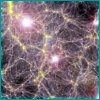
The Cosmic Web — Filamentary large-scale structure of the observable universe.
Smooth Galaxies
Not to be confused with the popular British chocolate bar, “smooth galaxies” are a serious point of debate for BB models.
Early James Webb Space Telescope (JWST) results intensified an existing controversy about how quickly mature galactic structure can arise.
Some analyses report an unexpectedly high fraction of smooth disks and orderly spirals at high redshift — awkward for simple merger-driven, bottom-up expectations.
Defenders of ΛCDM argue this may be mitigated by selection effects, revised feedback prescriptions, or earlier-than-expected disk settling.
Critics counter that the scale of revision is itself telling: the model is being forced to adapt to data it did not clearly anticipate.
One recent paper — bluntly titled “Panic!” — reports that smooth spiral galaxies are far more numerous than expected in some merger-heavy scenarios.
In plain language, this is difficult to reconcile with the simplest merger story.
There is another big problem, literally and metaphorically: large-scale structures that appear hard to form within the standard timeline have also been highlighted by recent observations.
Further.
The Dwarf Galaxy Problem
Also known as the missing satellites problem, this refers to the mismatch between the number of observed dwarf galaxies and the number predicted by many BB/ΛCDM simulations.
While the universe contains plenty of normal-sized galaxies, the abundance and distribution of dwarfs often appear inconsistent with straightforward expectations.
Light Element Abundances
Light element abundances remain a contested area. Critics argue that popular summaries overstate how cleanly the BB predicts observed abundances, and that a degree of retrofitting has occurred.
Update (2022): some commentators claim that JWST-related analyses deepen the tension for helium and lithium in certain interpretations.
The Redshift Controversy
No discussion of the BB seems complete without mentioning Halton Arp, an outstanding pupil of Edwin Hubble.
His Atlas of Peculiar Galaxies details many redshift anomalies.
Redshift refers to the shift of light toward longer wavelengths, commonly interpreted as a Doppler recession effect.
Arp documented objects that appear interacting or associated, yet exhibit markedly different redshifts — a problem for a simple “redshift equals distance” rule.
Arp is often described as a modern-day Galileo because he was denied observational time at several US observatories and later moved to the Max Planck Institute in Germany.
“If astronomy were a science, astronomers would have wondered if the cluster (inset, left) might have been ejected from the nearby active galaxy NGC 7314. They would have wondered if its high redshift might be due to that ejection instead of to an expansion of the universe. They would have wondered if the cluster might be an early stage of galaxy cluster formation in the near present instead of in the far past.”
Field worker who preferred to remain anonymous
Pictured above is the active galaxy NGC 7314, and the small inset shows a recently discovered cluster of galaxies. The trouble is, the inset is no small problem for BB timelines.
According to the standard redshift-distance interpretation, the cluster is ~9 billion light years away. That implies we are seeing it as it was very early in the assumed BB chronology.
Yet the structure appears surprisingly mature for that stage, and an ESO news release commented:
"The discovery of such a complex and mature structure so early in the history of the Universe is highly surprising. Indeed, until recently it would even have been deemed impossible."
In other words, the observation adds tension that requires explanation. Critics argue this kind of result should be treated as potentially falsifying, rather than simply “surprising”.
It also echoes Arp’s repeated claim that high-redshift objects may be physically associated with lower-redshift active galaxies.
In a paper on galaxy clusters (with David G. Russell) published in the Astrophysical Journal (March 10, 2001), Arp and Russell added further active/cluster associations to the list of redshift anomalies.
See also Quasars and quasi-science.
The “Fingers of God”
If redshift were a clean proxy for distance, large-scale maps would be straightforward. In practice, distortions such as the “Fingers of God” appear and require additional interpretive steps and corrections.
These effects do not automatically falsify expansion, but they do show that “redshift equals distance” is not a simple one-to-one rule — and critics argue that the resulting flexibility makes the framework harder to falsify than is often admitted.
"Since religion intrinsically rejects empirical methods, there should never be any attempt to reconcile scientific theories with religion." Hannes Alfvén
The Hubble Constant
Edwin Hubble (1889–1953) confirmed the existence of galaxies beyond the Milky Way. The proportionality between the apparent recessional velocity of galaxies and their distance is called Hubble’s constant — though some call it the Hubble “Mostly Constant” because of ongoing measurement tensions.
He didn't accept a simplistic Doppler interpretation of redshifts (see The Observational
Approach to Cosmology), noting difficulties with the necessary brightness corrections and suggesting that a non-Doppler
interpretation could yield a simpler, non-curved-space cosmology.
Moreover, Hubble was notably cautious about the apparent velocity-distance relationship itself. Although redshifts increased systematically with distance, he warned that interpreting them directly as recession velocities introduced additional assumptions and potentially troubling consequences. The observations established a relationship between redshift and apparent distance; they did not, by themselves, establish what physically caused the redshift. This distinction is often lost in simplified accounts, where Hubble is portrayed as having discovered an expanding universe rather than an observational relationship whose interpretation he continued to question.
Dark Matter and Dark Energy
The BB/ΛCDM framework relies on non-baryonic dark matter and dark energy to resolve major mismatches between model and observation.
Yet despite decades of searching, direct detection remains elusive. Critics argue this looks less like “invisible matter” and more like missing physics.
Anthony Peratt contends that electromagnetic forces can be several orders of magnitude stronger than gravity in certain plasma regimes, and can operate effectively over long ranges.
On the largest scales, critics argue that evidence for external forces on galaxies could reduce the need to postulate dark matter and dark energy.
"We have to learn again that science without contact with experiments is an enterprise which is likely to go completely astray into imaginary conjecture." Hannes Alfvén
Religious Motivations
To Alfvén, the Big Bang was a modern creation narrative:
"I was there when Abbé Georges Lemaître first proposed this theory. Lemaître was, at the time, both a member of the Catholic hierarchy and an accomplished scientist.
He said in private that this theory was a way to reconcile science with St. Thomas Aquinas' theological dictum of creatio ex nihilo or creation out of nothing."
"There is no rational reason to doubt that the universe has existed indefinitely, for an infinite time. It is only myth that attempts to say how the universe came to be, either four thousand or twenty billion years ago."
"Since religion intrinsically rejects empirical methods, there should never be any attempt to reconcile scientific theories with religion...
The key is not to confuse myth and empirical results, or religion and science."
"And if there were a God, I think it very unlikely that He would have such an uneasy vanity as to be offended by those who doubt His existence." Bertrand Russell
Lemaître is famous for describing the beginning of the universe as “a day without yesterday” in reference to Genesis.
George Gamow, another famous Big Bang proponent, described graphs of Big Bang conditions as “Divine Creation Curves” and sent a copy of his book The Creation of the Universe to the Pope.
Even the Pope of the time favoured an oscillating model in which the Big Bang was not necessarily a literal beginning.
General Relativity
Albert Einstein favoured some form of steady-state universe, but his General Relativity did not naturally yield a stable cosmology without additional assumptions.
Lemaître’s expanding-universe model helped shift the debate, though Einstein himself expressed reservations (see quote, right).
To be fair to Einstein, he was never satisfied that his theories were complete.
He believed GR needed tying back down to physical reality — and to this day GR and quantum mechanics remain incompatible.
Unfortunately, others ran with the mathematics, and we now see cosmology in a prolonged period of tension and revision.
"You can imagine that I look back on my life's work with calm satisfaction. But from nearby it looks quite different. There is not a single concept of which I am convinced that it will stand firm, and I feel uncertain whether I am in general on the right track." Albert Einstein
"Since the mathematicians have invaded the theory of relativity, I do not understand it myself any more." Einstein
Einstein was also unhappy with the black hole idea as it later developed, though the topic remains contentious. See BH article.
Black Holes Tear Logic Apart
Black holes are often treated as necessary because, within GR-based models, extreme compactness is used to account for energetic behaviour in galactic centres.
Critics counter that plasma dynamics can generate collimation, rapid variability, filamentation, and high-energy activity without requiring singularities or invisible “magic mass”.
See the Plasma Focus explanation on the Technical II page of this site.
The standard case for black holes is inference-driven: a GR model is fitted to the observations, and the compact object is labelled a black hole because the mathematics permits it.
Critics argue that electromagnetic effects are too often treated as secondary when they may be primary drivers.
"A new study of supermassive black holes at the centers of galaxies has found magnetic fields play an impressive role in the systems’ dynamics...
the magnetic field strength matched the force produced by the black holes’ powerful gravitational pull..."
"Physics is mathematical not because we know so much about the physical world, but because we know so little." Bertrand Russell
Rapid luminosity changes! Black Holes or Plasmoids?
Further evidence for electromagnetic plasma phenomena is being discussed: how can the corona of a “black hole” brighten and dim on such short timescales?
"We expect that luminosity changes this big should vary on timescales of many thousands to millions of years... But in this object, we saw it change by 10,000 over a year, and it even changed by a factor of 100 in eight hours..."
Event Horizons
According to GR, nothing travels faster than light, though quantum entanglement is often said to complicate simple intuitions about nonlocal correlation.
It is also claimed that nothing can escape a black hole — not even light — and for that reason black holes were historically treated as unimageable.
The 2019 imaging claims remain debated in some quarters. See Latest News.
Also see the Mathematics page for more of Stephen Crothers’ work criticising the mathematics behind certain popular claims.
"There is nothing below the 'event horizon' because there is no event horizon... (excerpt)"
Stephen J. Crothers
Here is a video further explaining these geometric claims:
"The trouble with the world is that the stupid are cocksure and the intelligent are full of doubt." Bertrand Russell
The Nebular Hypothesis
According to this hypothesis, the planets and stars eventually accreted from a giant dust cloud produced by the Big Bang.
It is also commonly assumed that the planets have occupied more-or-less steady orbits ever since, and that gravity and inertia are the sole agents responsible.
Critics argue there is little direct observation of this entire chain of claims, and that key assumptions have solidified into doctrine.
"The extraordinary thing is that scientists accept the Big Bang and in the same breath deride the Creationists." Wallace Thornhill
Additional Resources
Eric Lerner is a plasma cosmologist noted for his criticism of the BB.
He wrote The Big Bang Never Happened, which can be ordered online from the link below.
He is Executive Director of the Focus Fusion Society, and President of Lawrenceville Plasma Physics in New Jersey.
"The observers come in now with the belief that we live in a Big Bang Universe... They don't come in with the possibility that there are alternatives...
There is a complete lack of balance in the way observational programs and funding are conducted..."
Geoffrey Burbidge, Theoretical Astrophysicist
In the eye of the beholder
Fred Hoyle coined the phrase "Big Bang" as a term of derision but, ironically, it stuck. The phrase has a memorable elegance, unlike the hypothesis itself, which critics argue has become a patchwork of interpretations and auxiliary assumptions.
When Einstein met the Catholic priest and mathematician Georges Lemaître in 1933, he is said to have remarked:
"This is the most beautiful and satisfactory explanation of creation to which I have ever listened."
Perhaps the Big Bang does have some merit after all.
Artistic merit.
"It is ironical that, in the very field in which Science has claimed superiority to Theology... the positions are now reversed.
Science will not tolerate criticism of Relativity, while Theology talks freely about the death of God..."
Herbert Dingle
Ultimately, this is as much a question of scientific methodology as it is of cosmology. When observations repeatedly conflict with prediction, at what point should an established theory give way to an alternative framework?
"Science without religion is lame, religion without science is blind ...
a legitimate conflict between science and religion cannot exist." Einstein